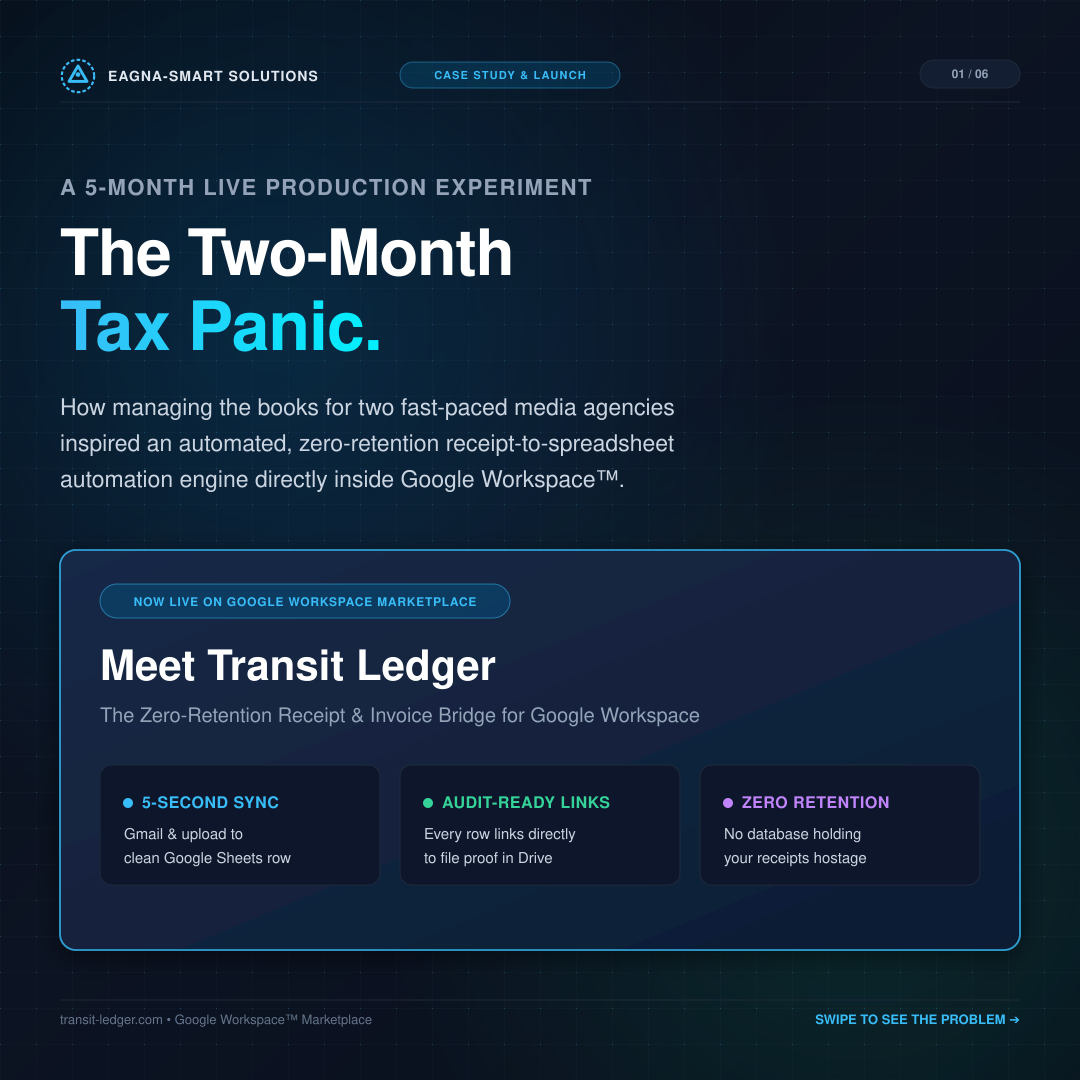


Preparing for corporate tax season shouldn’t take two months of all-hands panic.
Last year, one of our partner companies managing the books for two fast-paced media agencies hit a breaking point. Invoices were scattered across three email inboxes. Receipts were crumpled in glove compartments or snapped as random smartphone photos. Recurring SaaS subscriptions, Uber rides, hardware purchases, and contractor invoices were hopelessly blurred together.
At tax time, it meant:
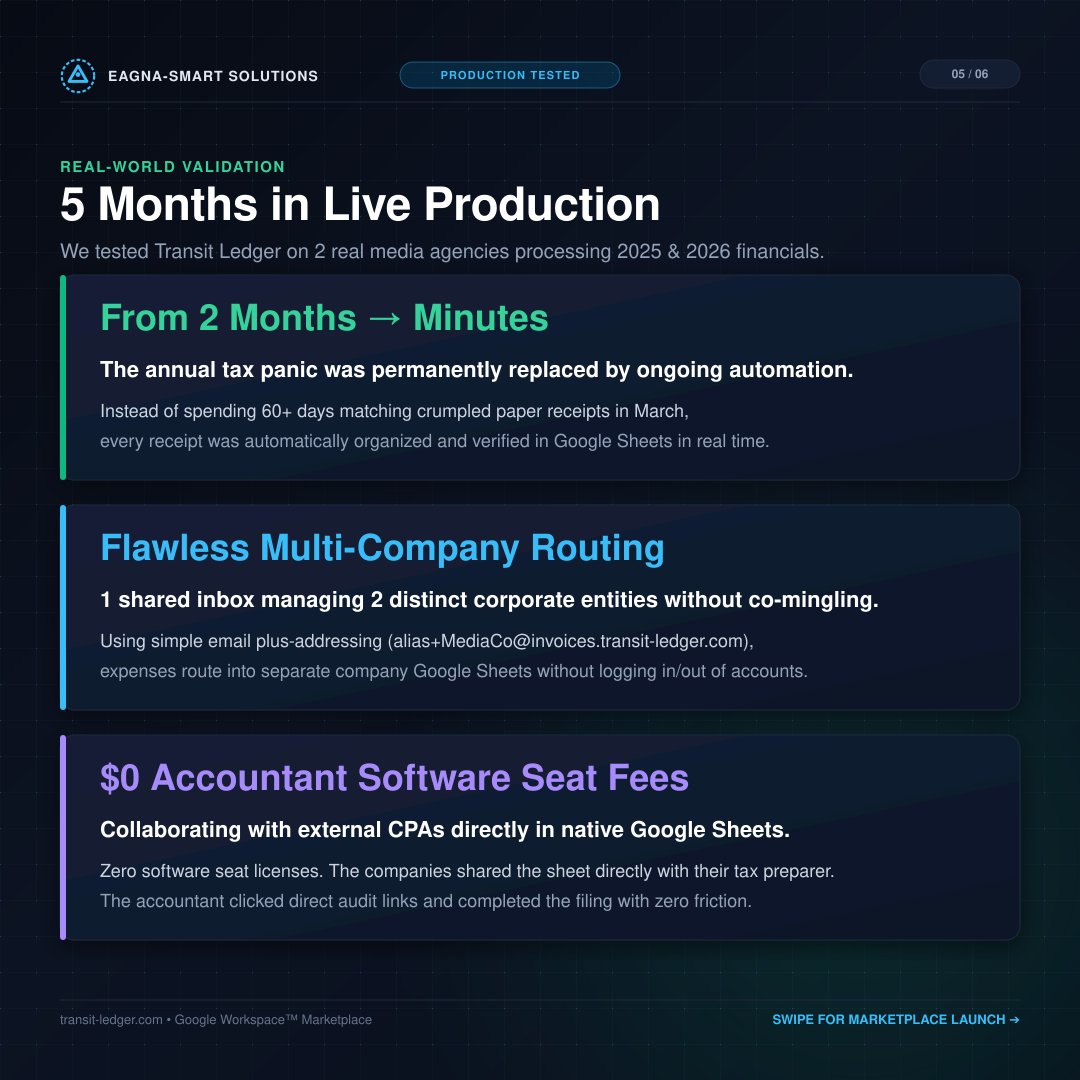
- Over two months spent frantically searching and entering numbers into spreadsheets.
- Zero context on which client project an expense belonged to nine months earlier.
- Thousands in missed tax credits across Canadian HST/GST/PST input tax credits and US sales tax deductions.
- Pure audit dread at the thought of a CRA or IRS audit, because source documents were disconnected from the spreadsheet.
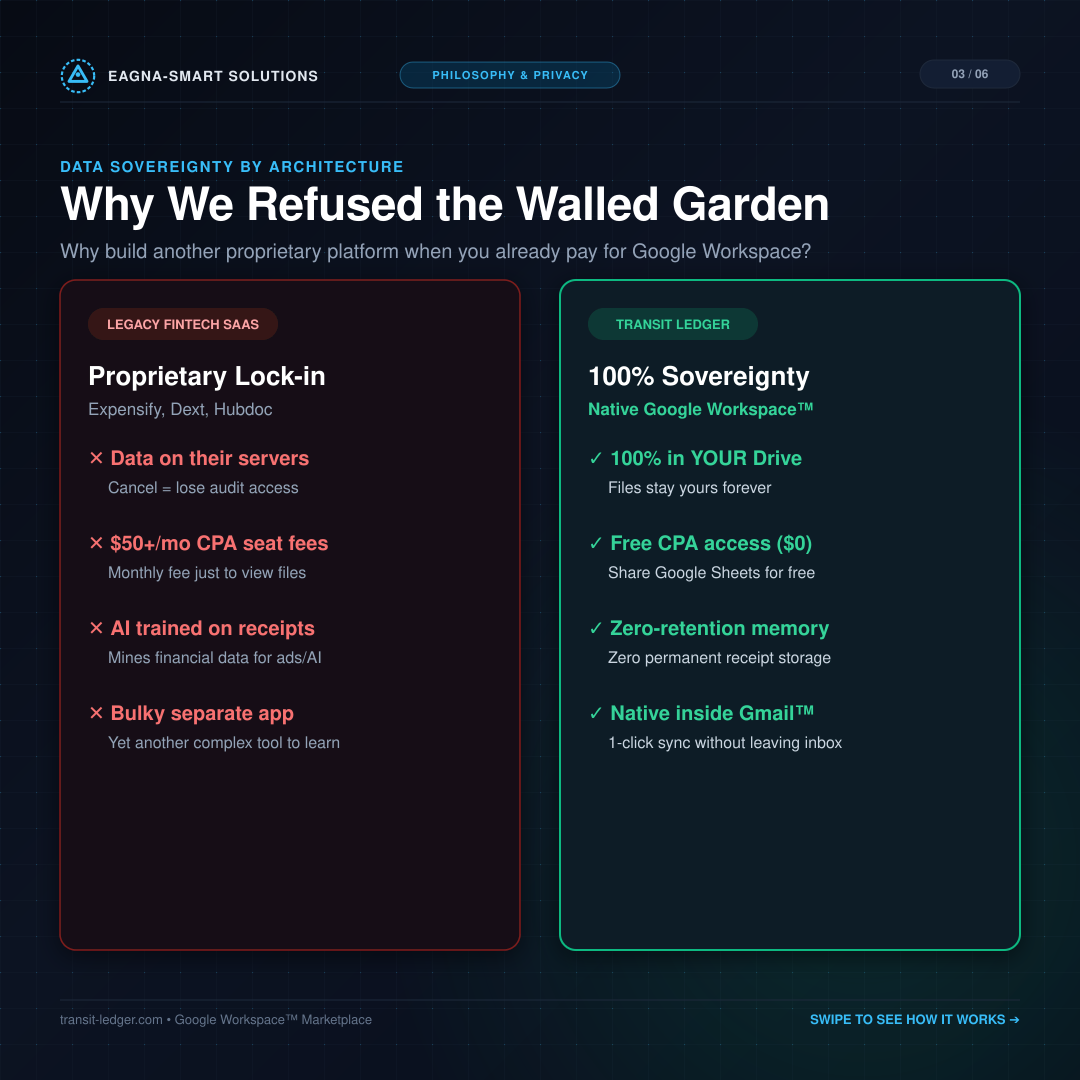
Traditional expense platforms weren’t the answer. They demanded expensive monthly seat licenses just to let an external accountant view records, locked financial data into proprietary walled gardens, and added bulky, high-friction workflows that the creative team avoided using.
So we asked a straightforward architectural question:
“What if you could effortlessly organize your receipts and invoices directly inside your own Google Drive™ and Google Sheets™—with a direct, clickable link to the original receipt or invoice on every single row?”
That is why we engineered Transit Ledger.
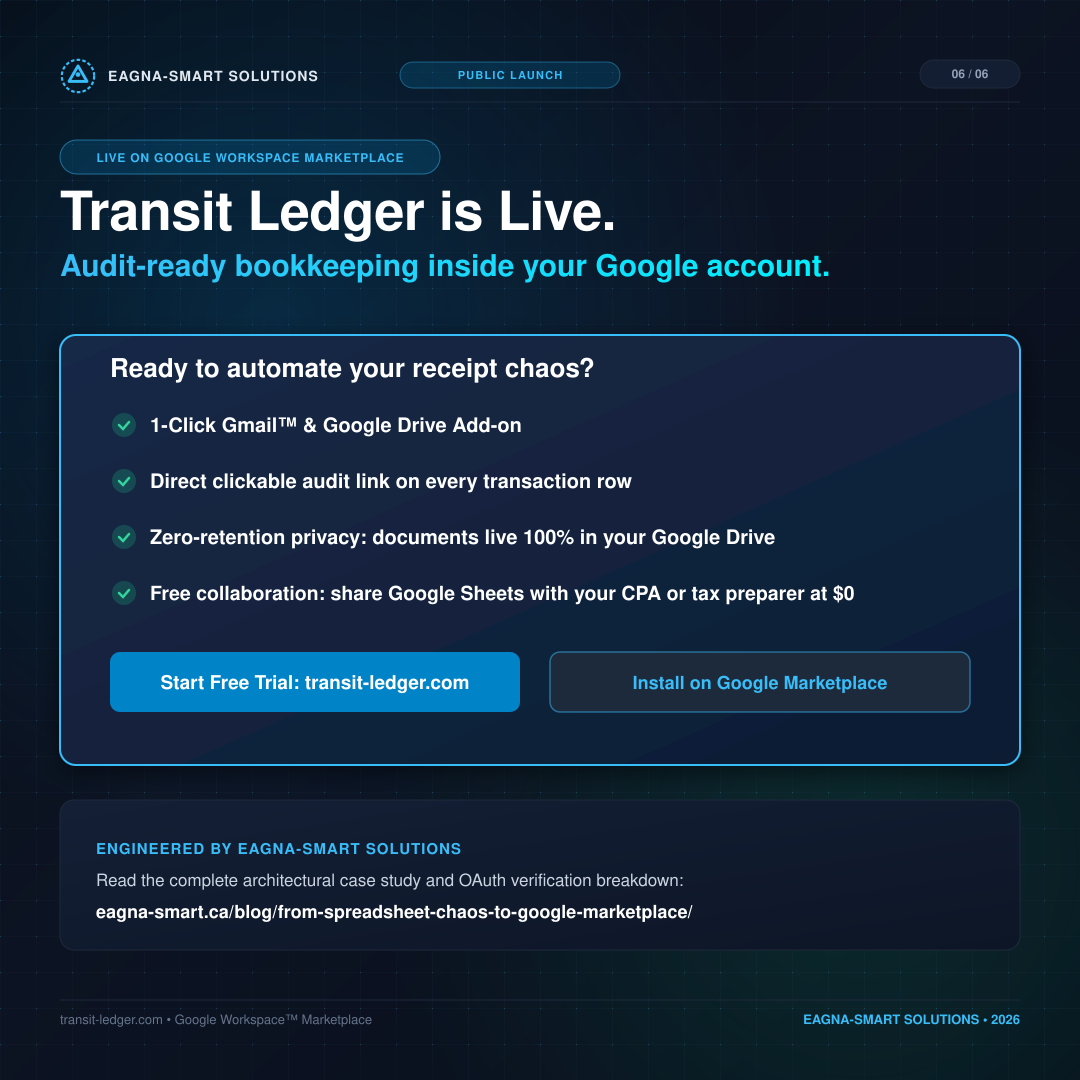
After 5 months of live production testing—processing 2025 and 2026 expense backlogs for real media agencies—Transit Ledger delivers strict least-privilege data access with Zero Database Retention, and is now Available on Google Workspace Marketplace.
- Read the full engineering story: From Spreadsheet Chaos to Google Marketplace
- Learn more and explore features: transit-ledger.com
Google Workspace, Google Sheets, and Google Drive are trademarks of Google LLC.